Bloommove 1
Fertile ground where colonies thrive.
Soft, living, open ground: the common land your colonies grow into. Quick to cross, but with clear sightlines and nowhere to hide.
Everything you need to command a house across the Reach. Every number below is the exact value you'll play with.
Epochs is a turn-based strategy game. Players take turns moving ships, building, researching and fighting across a grid of star systems. Each round your colonies pay out credits and your score climbs with the colonies, tech and territory you hold.
You pick how a match is won before it starts. In Standard — the default — you win by claiming the map: the last house still holding a colony takes it. There is no points bar. In Ascendancy, the first house to reach 75 points claims dominion instead. Either way, if the Reach falls silent before anyone has won, the highest score at round 150 takes it.
Move and act with every ship, spend credits on production and research, then end your turn. The AI houses answer in kind.
Each colony pays 3+ credits a round. Improvements and house traits raise the yield. Credits build ships and buy tech.
Territory, colonies and technology all add points. Score decides an Ascendancy match at 75, and settles any match still running at round 150.
Every game comes down to four instincts: explore the map, expand your holdings, exploit what you own, and outfight your rivals.
Push rangers into the fog. Vision reaches only a couple of hops, so map control is earned, not given. Relics, neutral colonies, and — on Rift maps — precursor wormhole gates reward the brave.
Settle colonies with founders, then send builders to weave hyperlanes between them. Colonies grow, level up, and can specialize into a permanent track. Every colony level is worth more score than raw territory.
Build tile improvements, park harvesters to double a tile, research technology, and sign pacts. A well-developed, well-connected core out-produces a sprawling, undefended one.
Field the right fleet for the moment — screen with interceptors, strike from range with breakers, crack colonies with bombards, finish with dreadnoughts — and promote a veteran to flagship to rally the fleet around it. Break your rivals before they crest.
11 ship roles, each with a distinct job. Attack and defense decide combat; move is tiles per turn; range is how far a ship can strike; sight is its vision radius. Cost is in credits, and heavier hulls take more than one turn to build. A ship that survives enough kills becomes a veteran, and a veteran can be promoted to your flagship — lending a command aura that sharpens every friendly attacker beside it.
This is not a turn-1 shopping list. Only the 3 hulls with no gate below are buildable from the opening; the rest are unlocked by research, and the tag under a name is the tech that opens it. Which specialists you can field is a consequence of how you spent your research.
| Ship | Atk | Def | HP | Move | Range | Sight | Cost | Build |
|---|---|---|---|---|---|---|---|---|
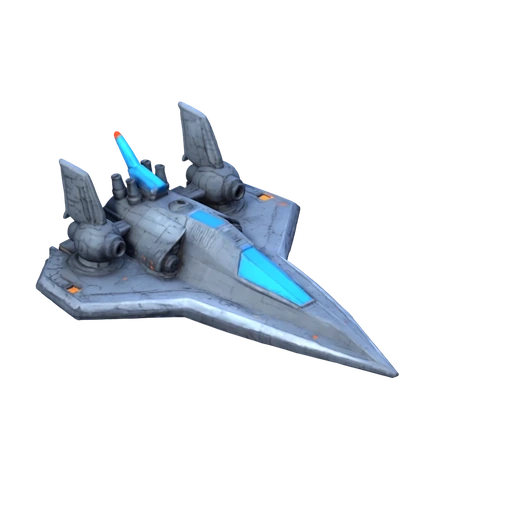 Warship core capital — balanced attacker | 6 | 2 | 10 | 2 | 1 | 1 | 5 | 2 turns |
 Founder settler — founds new colonies | 1 | 2 | 10 | 2 | 1 | 1 | 3 | 1 turn |
 Ranger fast skirmisher / scout Needs Propulsion | 5 | 1 | 8 | 3 | 1 | 2 | 3 | 1 turn |
 Breaker ranged striker (range 2) — no reply Needs Weapons | 6 | 1 | 8 | 2 | 2 | 2 | 5 | 2 turns |
 Interceptor cheap fast screen Needs Propulsion | 4 | 1 | 6 | 4 | 1 | 2 | 2 | 1 turn |
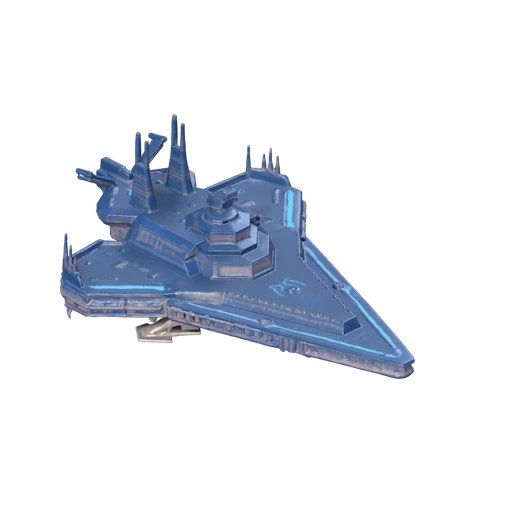 Carrier tanky support capital, wide sight Needs Strike Doctrine | 3 | 3 | 16 | 2 | 1 | 3 | 8 | 3 turns |
 Dreadnought apex heavy hitter Needs Railguns | 9 | 3 | 16 | 2 | 1 | 1 | 10 | 3 turns |
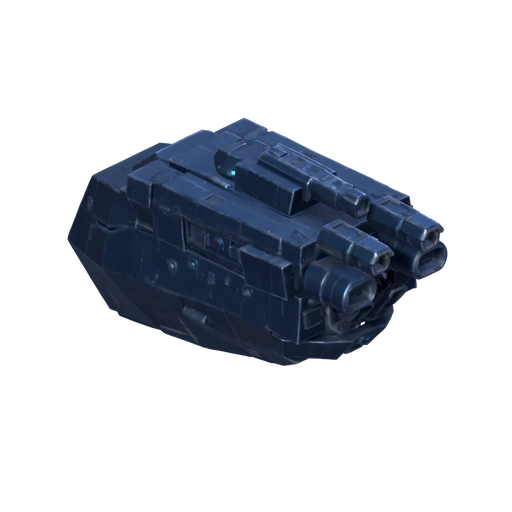 Harvester durable economy / extraction Needs Nebula Harvesting | 1 | 3 | 12 | 2 | 1 | 1 | 4 | 2 turns |
 Tender fleet support — heals adjacent ships Needs Logistics | 1 | 3 | 14 | 3 | 1 | 1 | 4 | 2 turns |
 Builder field engineer — builds all structures | 1 | 2 | 10 | 3 | 1 | 1 | 3 | 1 turn |
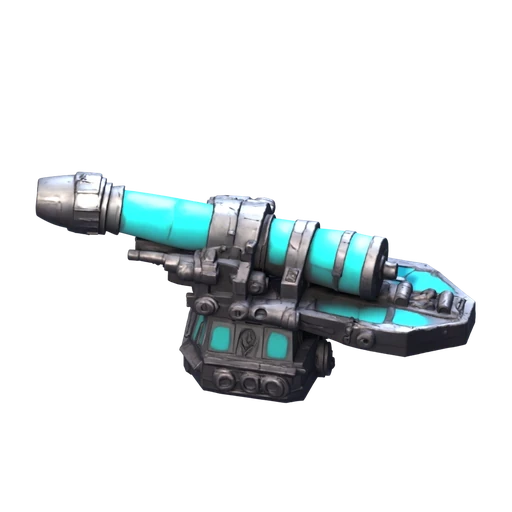 Bombard siege artillery — attacks colonies only Needs Siegecraft | 6 | 1 | 6 | 2 | 3 | 1 | 15 | 3 turns |
Seven sector types. The number is the move cost to enter — higher is slower, and Deep Space is impassable to everyone: empty dark that fleets route around. Some houses cross their favoured terrain more cheaply, heal upon it, or draw extra yield from it.
Fertile ground where colonies thrive.
Soft, living, open ground: the common land your colonies grow into. Quick to cross, but with clear sightlines and nowhere to hide.
Drifting dust that hides a fleet.
Ionised dust drifts in slow currents. It fouls sensors and scatters comms, easy to get lost in and easy to hide in.
A shattered field of rock and wreckage.
A churned belt of rock and wreckage, the bones of a world that did not survive the cluster. Passage is slow and grinding.
A trade lane skimming the edge of a giant.
Ships ride the orbital lane past a gas giant that has never noticed them. Tethys built its fortune on lanes exactly like this.
Frozen ground that still feeds a colony.
A cold, cracked expanse on the cluster’s edge. Volatiles locked in the ice feed slow growth for anyone built to work it. Vostok is.
Harsh, exposed, and rich in ore.
Bedrock stripped bare under a thin, hard sun. The raw ore runs deep, but there is little cover and less shelter out here.
Dead, empty, impassable dark.
The deep between the lanes. No world, no cover, no way through. Ships route around it; nothing crosses it.
25 technologies across four lanes. Entry techs open a lane; tier-2 deepens it; cross-lane capstones reward a balanced empire. Costs are in research credits.
Two different ships expand your empire, and it matters which one you produce. The founder only settles: it consumes itself to plant a new colony. The builder raises every structure on owned tiles — improvements and extractors boost a tile's yield; turrets guard it; relays extend vision; supply depots push your logistics forward; and a Forward Shipyard lets you produce combat ships far from the capital, so war moves to wherever you can plant one. Hyperlanes are permanent fast routes, also laid by a builder, spent from its movement rather than from credits.
Both start unlocked, so your first production is a real three-way choice: fight, expand, or develop.
| Structure | Role | Cost |
|---|---|---|
| Extractor | economy | 4c |
| Improvement | economy | 3c |
| Hyperlane | utility | move points |
| Turret | military | 5c |
| Relay | utility | 3c |
| Forward Shipyard | military | 8c |
| Supply Depot | utility | 6c |
Beyond the basics, a handful of systems reward players who read the whole board — command, the old gate-network, diplomacy, and how a colony chooses to grow.
A ship that racks up enough kills becomes a veteran and hits harder. Promote one to your flagship and it projects a command aura, sharpening every friendly attacker beside it — until it falls.
Rift maps scatter your holdings across continents joined only by precursor wormhole gates. Research the jump drive to travel them, then seize and hold the gate-mouths for a steady toll each round.
Sign a pact with a rival for shared income and trade growth; envoys make one hold longer and pay richer. Break it when the moment turns — diplomacy is a lever, not a leash.
A grown colony can specialize into a permanent track, bending it toward credits, production or defense. The choice is one-way, so shape each colony to the ground it sits on.
Colonies are your engine and your anchor. They pay credits, project vision, grow in level over time, and must be defended — capturing an enemy colony swings a game. Colony levels are the single biggest term in your score, ahead of technology, with raw territory a distant third.
Each colony pays 3 base credits a round, before improvements and house traits.
Colonies have 16 HP and must be sieged down. Some houses regrow them or brace harder.
The first 2 ships per colony are free; beyond that each costs 1 credit a round. Fleets have a price.
Standard: outlast everyone — the last house holding a colony wins. Ascendancy: reach 75 points. Either way, highest score at round 150 takes an undecided game.
Each house is a distinct power with its own doctrine. Identity is more than a colour — it changes where you heal, how you move, and what you build toward.
“Make the dead worlds live.”
Strategy. Settle nebulae early for healing and vision. Let warships anchor defensive positions while rangers scout. Your strength compounds. Early losses hurt, but a rooted Verda position becomes nearly impossible to uproot.
“Build it to outlast the siege.”
Strategy. Your colonies are naturally tougher, so use them as anchors. Push slowly with warships backed by fortified positions. Avoid overextension; a single well-defended colony is worth three unprotected ones.
“Own nothing; reach everything.”
Strategy. Your extra movement is your edge; use it for early map control and relic racing. Avoid static defense. You cannot lay hyperlanes but you do not need them. Strike, drift, and reposition before the enemy adapts.
“Commerce is the only law.”
Strategy. Orbit tiles fund your economy and boost your attacks. Claim orbital sectors aggressively and defend from high ground. Your patience is an economic weapon: credit advantage becomes a tech lead, and a tech lead becomes late-game dominance.
“Settle where no one else will.”
Strategy. Asteroid and frozen terrain are your domain; move cheaply through them while enemies pay full cost. Use terrain control to create chokepoints. Your defense bonuses stack with positioning, and a warship on frozen ground is nearly invincible.